Healthcare workers, nursing students, and safety-minded professionals across Chico often hit the same wall: they need a current American Heart Association credential, but rotating shifts, clinical rotations, and family routines rarely match a fixed classroom date. AHA Self-Guided Learning was built for that situation. It lets eligible learners work through the knowledge portion of a course on their own schedule, then complete the required hands-on skills separately. This guide explains what the format involves, which courses use it, and how it differs from a purely online program.
Key takeaway: AHA Self-Guided Learning pairs self-paced online coursework with a hands-on skills session on approved feedback equipment — flexibility without dropping the practical part. It’s offered mainly for BLS, ACLS, and PALS, and the right course depends on your role and what your employer, school, or licensing body requires.
What AHA Self-Guided Learning Actually Involves
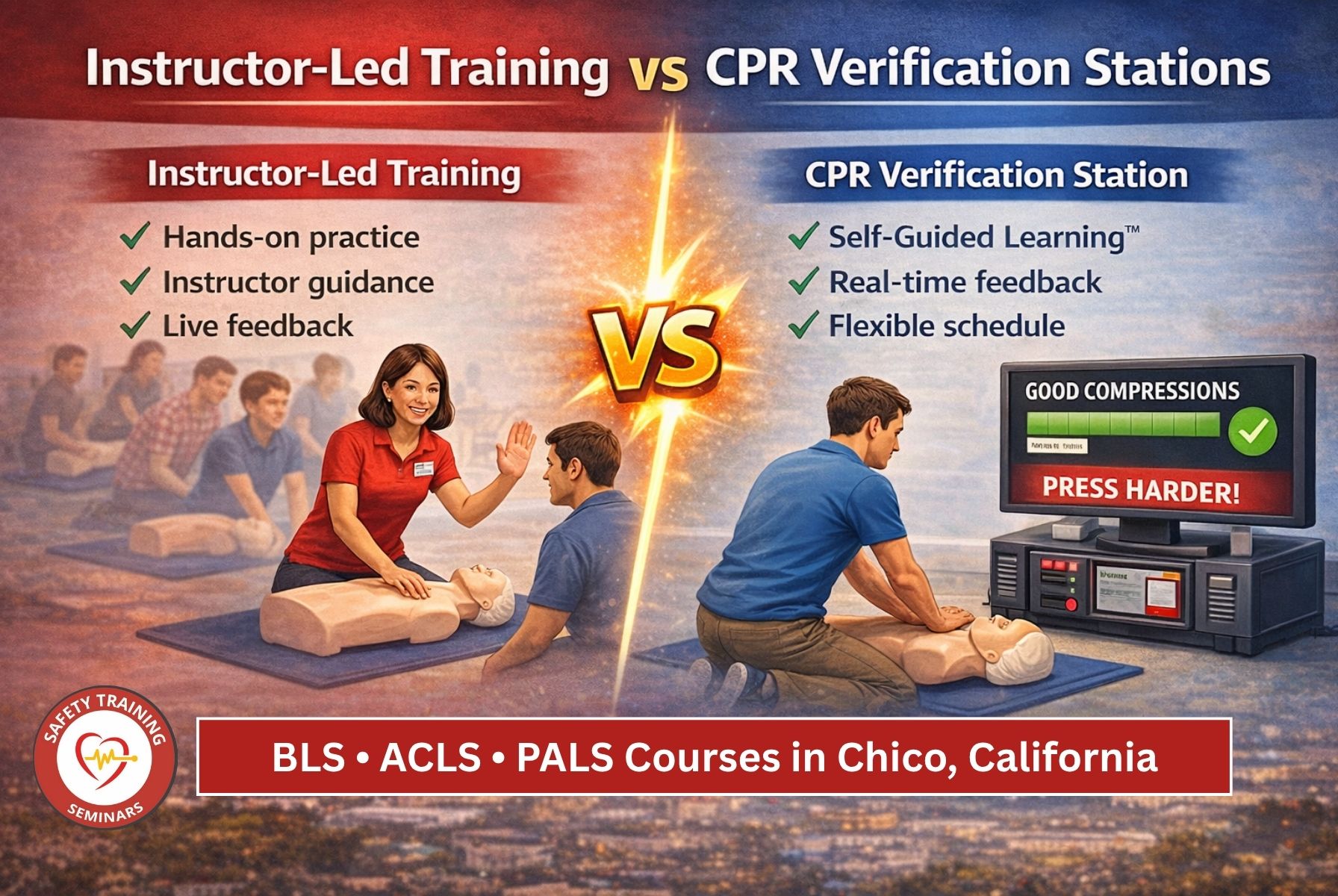
Self-Guided Learning is an American Heart Association format that splits a course into two parts you complete separately. First is the knowledge portion, worked through online at your own pace. Then comes the hands-on skills session, completed in person on approved equipment that gives real-time audio and visual feedback as you perform each skill.
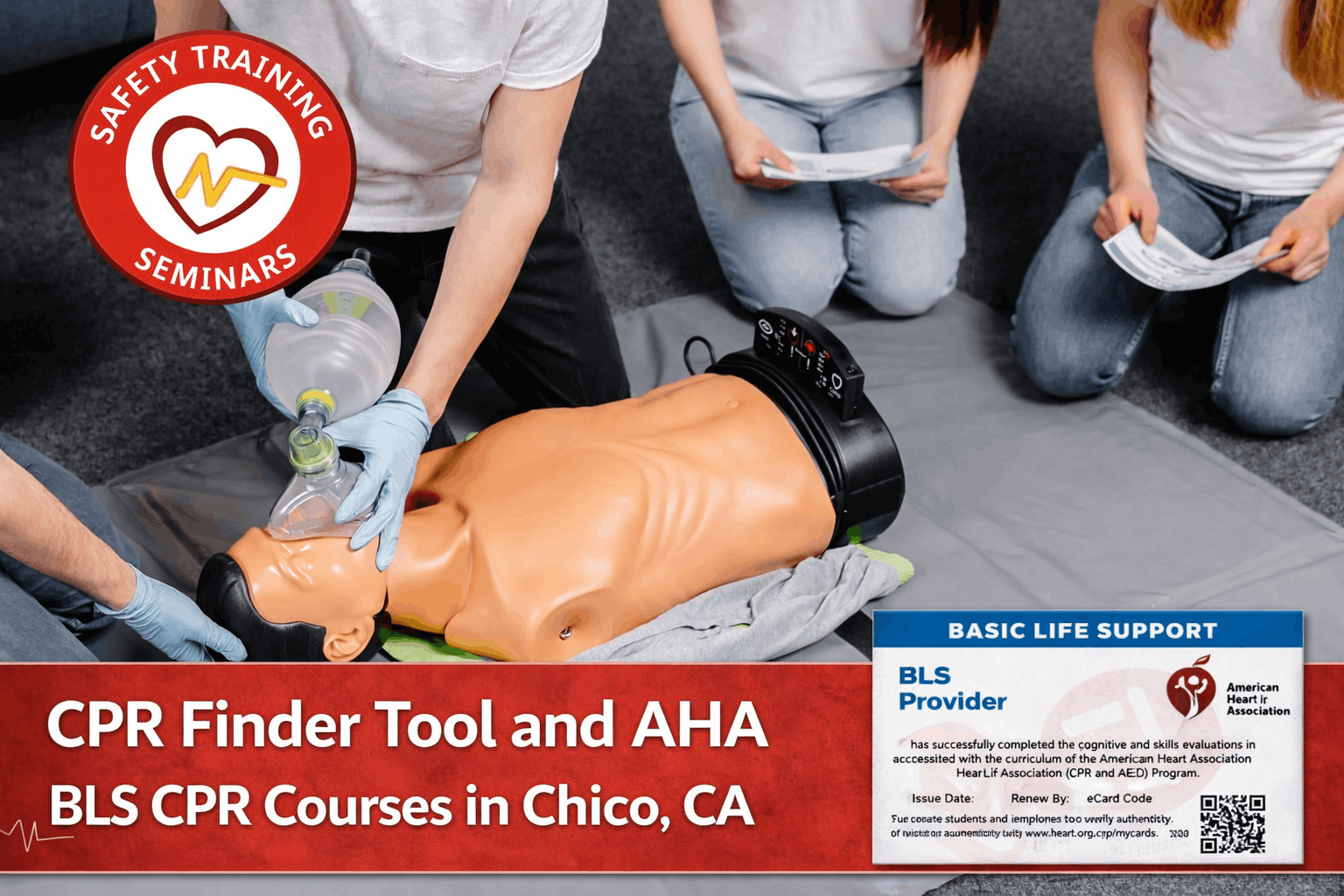
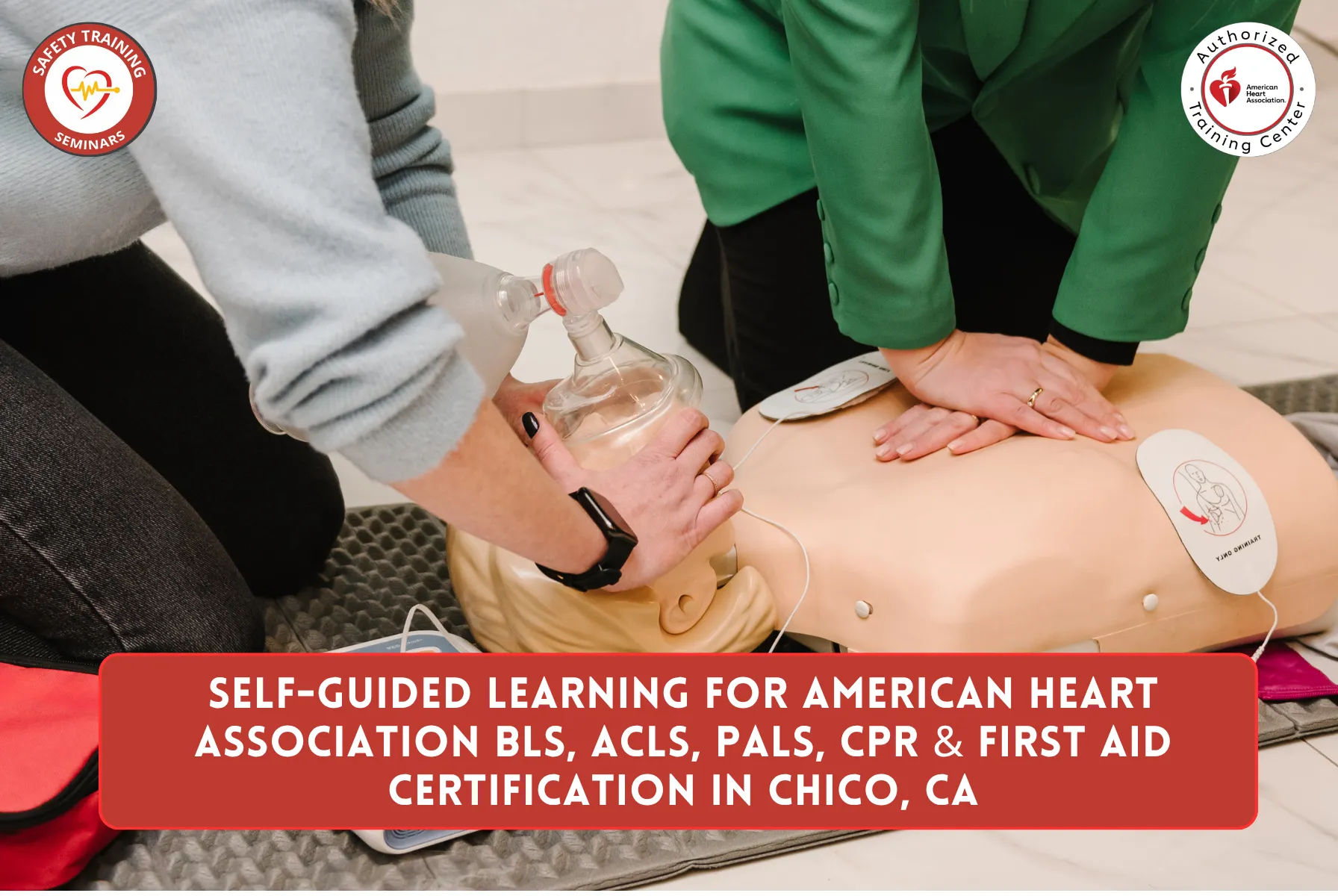
The practical component doesn’t disappear. Instead of a live instructor leading a group, a CPR Verification Station guides you through the required skills and evaluates your performance. A typical path:
- Enroll in the course that matches your professional role.
- Complete the online learning independently.
- Schedule and attend your self-guided skills session at a verification station learning center.
- Perform the required hands-on skills on the feedback-enabled equipment.
- Receive your AHA Provider eCard once you’ve met all requirements.
Course-by-Course: What’s Available and Who It’s For
BLS in Chico
Basic Life Support is written for people who respond to cardiac and breathing emergencies at work: registered nurses, nursing and medical students heading into clinicals, EMTs, paramedics, dental staff, and medical assistants. BLS goes beyond general public CPR by covering high-quality compressions, team-based resuscitation, and use of an AED and bag-mask device. Many local healthcare roles ask for an AHA BLS Provider card specifically, though the requirement varies by position. It’s worth reviewing the BLS and CPR classes offered in Chico before choosing a format.
ACLS in Chico
Advanced Cardiovascular Life Support builds on BLS for clinicians who manage adult cardiovascular emergencies — rhythm recognition, medication protocols, and leading a resuscitation team. It’s commonly tied to emergency, critical care, and procedural settings. Whether ACLS is required for you depends on your role, so confirm the expectation with your department or credentialing office rather than assuming.
PALS in Chico
Pediatric Advanced Life Support centers on emergency care for infants and children. It’s intended for healthcare professionals who may treat pediatric patients, such as those in emergency, pediatric, or urgent care settings. As with ACLS, the need for PALS is tied to your clinical responsibilities and differs from one organization to the next.
CPR, AED, and First Aid in Chico
Not every course fits the Self-Guided Learning format the same way. CPR, AED, and First Aid training is often aimed at people outside clinical roles: teachers, coaches, childcare providers, fitness instructors, workplace safety teams, and caregivers. Some run through online-plus-skills or fully in-person formats rather than the BLS/ACLS/PALS Self-Guided pathway. If your workplace calls for general CPR and First Aid rather than a provider-level card, confirm which specific course and format will be accepted.
How to Choose the Right Course
Picking the wrong certification is a common, avoidable mistake. This reference pairs each course with its audience:
| Course | Typically intended for |
| BLS | Healthcare professionals and healthcare students |
| ACLS | Clinicians managing adult cardiovascular emergencies |
| PALS | Clinicians managing pediatric emergencies |
| CPR/AED | General public and workplace settings |
| First Aid | Workplaces, schools, childcare, and community members |
Treat this as a starting point, not a rulebook. Requirements can vary by employer, school, licensing board, and training program. Before enrolling, confirm the exact course — and the accepted format — with whoever is asking you to certify.
Self-Guided vs. Online-Only vs. Traditional Training
These three formats are easy to confuse, and the differences can decide whether your card is accepted.
Self-Guided Learning pairs independent online study with a verified, hands-on skills session on feedback equipment — you set the pace of the knowledge portion and schedule the practical part around your life.
Traditional classroom training gathers everyone at a set time with a live instructor guiding practice and testing. Some learners prefer the structure and the chance to ask questions on the spot.
Online-only training delivers just the knowledge portion. On its own, it may not satisfy requirements that call for demonstrated skills or a provider-level card, so a purely online certificate can fall short of what’s accepted. No format wins for everyone — the right choice depends on what your requirement specifies.
Training Access Around Chico
Chico sits at the center of the northern Sacramento Valley, and that shapes who looks for flexible certification here. Nursing and allied-health students at California State University, Chico often need a current BLS card timed to clinical placements. Clinicians juggle rotating shifts that seldom match a fixed class date. Teachers, coaches, and childcare staff may need CPR or First Aid on a school calendar’s timeline, and safety teams often certify several employees at once.
For residents commuting in from Oroville, Paradise, Durham, or Gridley, a self-paced knowledge portion plus one scheduled appointment can cut down on repeat trips. Anyone weighing local BLS, ACLS, and PALS class options should match the course and format to their requirement first.
Safety Training Seminars in Chico
For learners in the area, Safety Training Seminars operates a Chico training center at 527 Flume Street, Suite 15, Chico, CA 95928. If you’re considering Self-Guided Learning, first identify which course your role calls for, then look at how the hands-on skills session is handled locally.
A nearby option helps when your schedule is unpredictable or you’re renewing on a deadline. Before you register, confirm that the course matches what your employer, school, or licensing body requires; that the format they’ll accept is the one you’re enrolling in; and whether you need an initial certification or a renewal.
Frequently Asked Questions
Is AHA Self-Guided Learning available for healthcare workers in Chico? Yes. Healthcare professionals in the Chico area can use the Self-Guided Learning format for BLS, ACLS, and PALS — completing the online portion independently and the hands-on skills at a verification station. Because it still includes verified skills, it suits nurses, clinicians, and students who need a provider-level AHA card but can’t attend a fixed class time.
Can nursing students in Chico complete BLS through Self-Guided Learning before clinicals? Often, yes — but confirm first. Many programs accept AHA BLS Provider certification, and Self-Guided Learning is one route to earn it. Since requirements vary, a Chico State or other local student should verify that AHA BLS specifically is accepted, so the credential lines up with placement deadlines.
Does Self-Guided Learning include hands-on skills, or is it entirely online? It includes hands-on skills. Only the knowledge portion is online; you still attend a self-guided skills session in person, performing required skills on equipment that provides real-time feedback. This is the main reason it differs from an online-only course, which may not satisfy requirements calling for demonstrated, verified skills.
How do I know whether I need BLS or a general CPR/AED course? It comes down to your role. BLS is generally intended for healthcare professionals and students; CPR/AED courses target the general public and workplaces. A nurse, EMT, or clinical student likely needs BLS; a coach, teacher, or office employee usually needs CPR/AED or First Aid. Confirm the requirement with your employer or school.
Can someone commuting from Oroville or Paradise use a Chico training location? Generally, yes. There’s no residency restriction on where you complete AHA training, so learners traveling in from Oroville, Paradise, and nearby communities can use a Chico-area center. The self-paced online portion plus one scheduled skills appointment is especially convenient when you’re driving in and want to limit trips.
Before You Enroll
The clearest way to avoid a wasted enrollment is to keep one distinction in mind: Self-Guided Learning keeps the required hands-on skills, while an online-only course may not — and that gap can decide whether your certification is accepted. Start with your requirement, not the format. Check with your employer, school, or licensing body to learn which course and card they expect, whether that’s BLS, ACLS, PALS, or a general CPR and First Aid option. Once you know, match it to a Chico training path that fits your schedule, and review the course and location details from Safety Training Seminars before booking.