Chico has a mix of hospital staff, Chico State nursing students, childcare providers, and workplace teams who all end up searching for the same thing at some point: a BLS CPR certification course that actually fits their requirement. If you’re heading into 2026 needing to get certified, renew a card, or simply figure out which course applies to you, the process is more straightforward than the number of training options online might suggest. This guide walks through what BLS certification covers, who typically needs it, and what to check before you enroll anywhere in the Chico area.
Key takeaway: BLS certification prepares healthcare providers to recognize and respond to cardiac and respiratory emergencies using CPR, rescue breathing, and AED operation, and it typically requires hands-on skills practice rather than an online-only format. If you’re unsure whether your job or program requires BLS specifically or a general CPR card, your employer, school, or licensing board is the most reliable source to confirm that requirement.
Why BLS Certification Matters Heading Into 2026
Hospitals, skilled nursing facilities, EMS agencies, and nursing programs in and around Chico commonly list BLS certification as a condition of employment or clinical enrollment. This isn’t a new trend for 2026, but if your certification lapsed during a busy stretch, or you’re entering healthcare training for the first time, it’s worth understanding what’s actually required rather than assuming any CPR class will satisfy it.
Some employers accept a general CPR and First Aid card for non-clinical roles. Others, particularly hospitals and clinical placement sites, specifically require BLS for Healthcare Providers because it covers content a general course doesn’t, including two-rescuer CPR and use of a bag-valve mask.
BLS vs. General CPR: Knowing the Difference
It’s easy to assume these are interchangeable, but they’re built for different audiences.
A general CPR and First Aid course is designed for the public, including teachers, childcare providers, fitness professionals, and workplace teams who may need to respond to an emergency but aren’t functioning as part of a clinical response team.
BLS certification goes further. It’s built for healthcare professionals, nursing students, and anyone who may need to perform CPR as part of a coordinated team response, covering additional skills like team dynamics during resuscitation and airway management techniques used in clinical settings.
If you’re not sure which one applies to you, check the specific wording in your job offer, syllabus, or licensing requirement. “CPR certified” and “BLS certified” are sometimes used loosely, even though they’re not always the same course.
What a First-Time BLS Class Actually Involves
For someone who hasn’t taken a healthcare certification course before, not knowing the format can be the biggest source of hesitation. Most BLS courses include:
- Instruction on recognizing cardiac and respiratory emergencies
- Adult, child, and infant CPR technique, including proper compression rate and depth
- AED use and practice on a training device
- Choking response across age groups
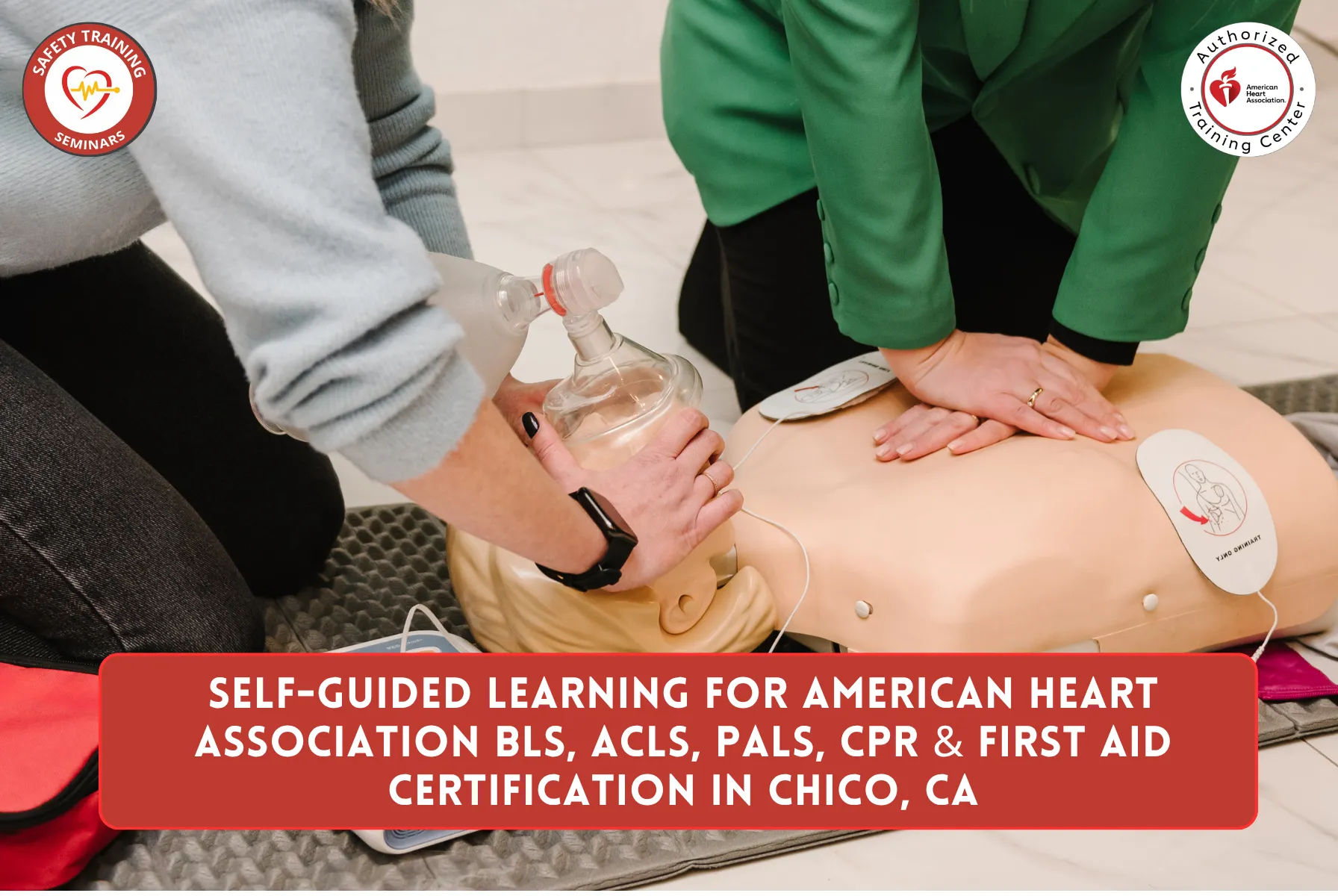
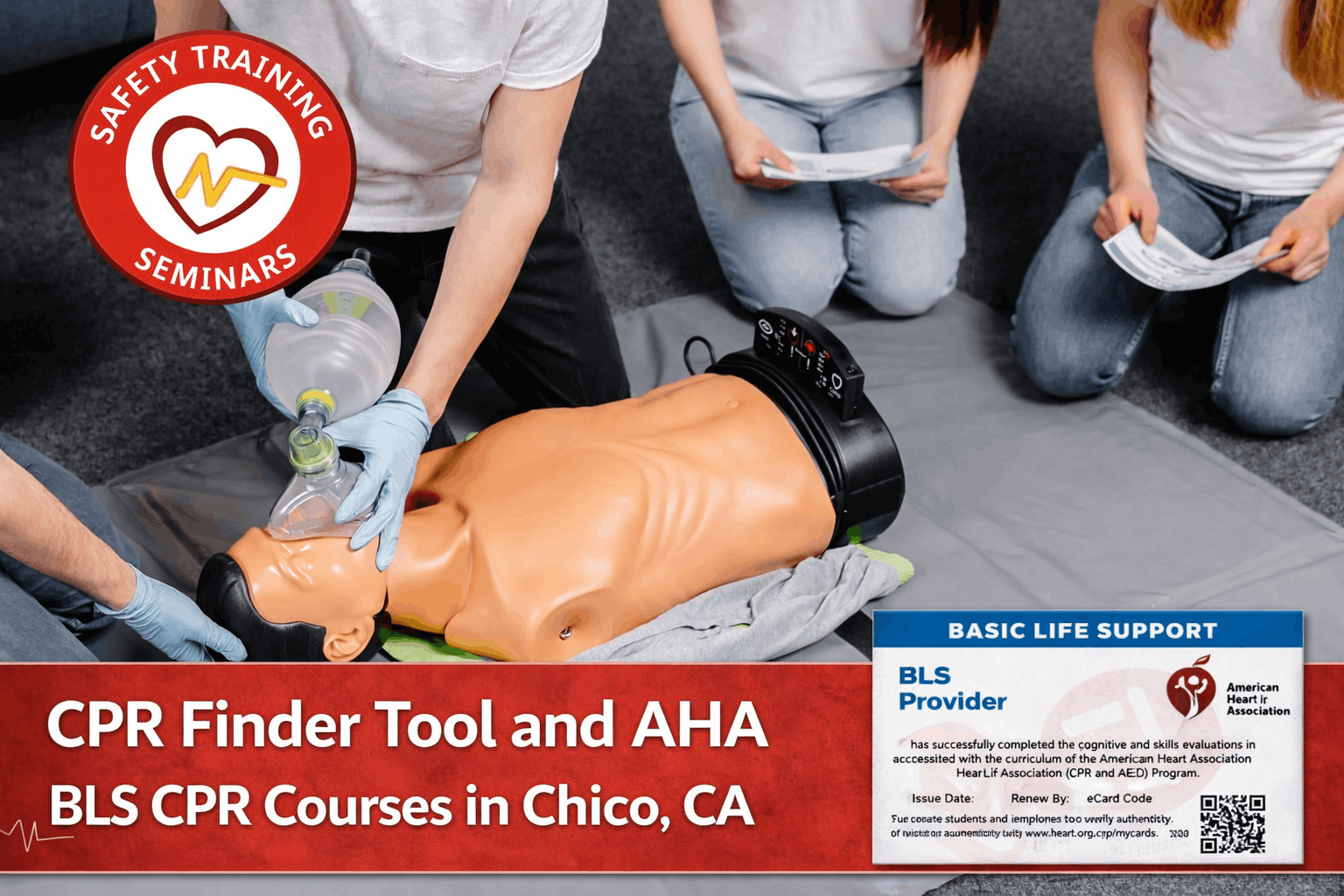
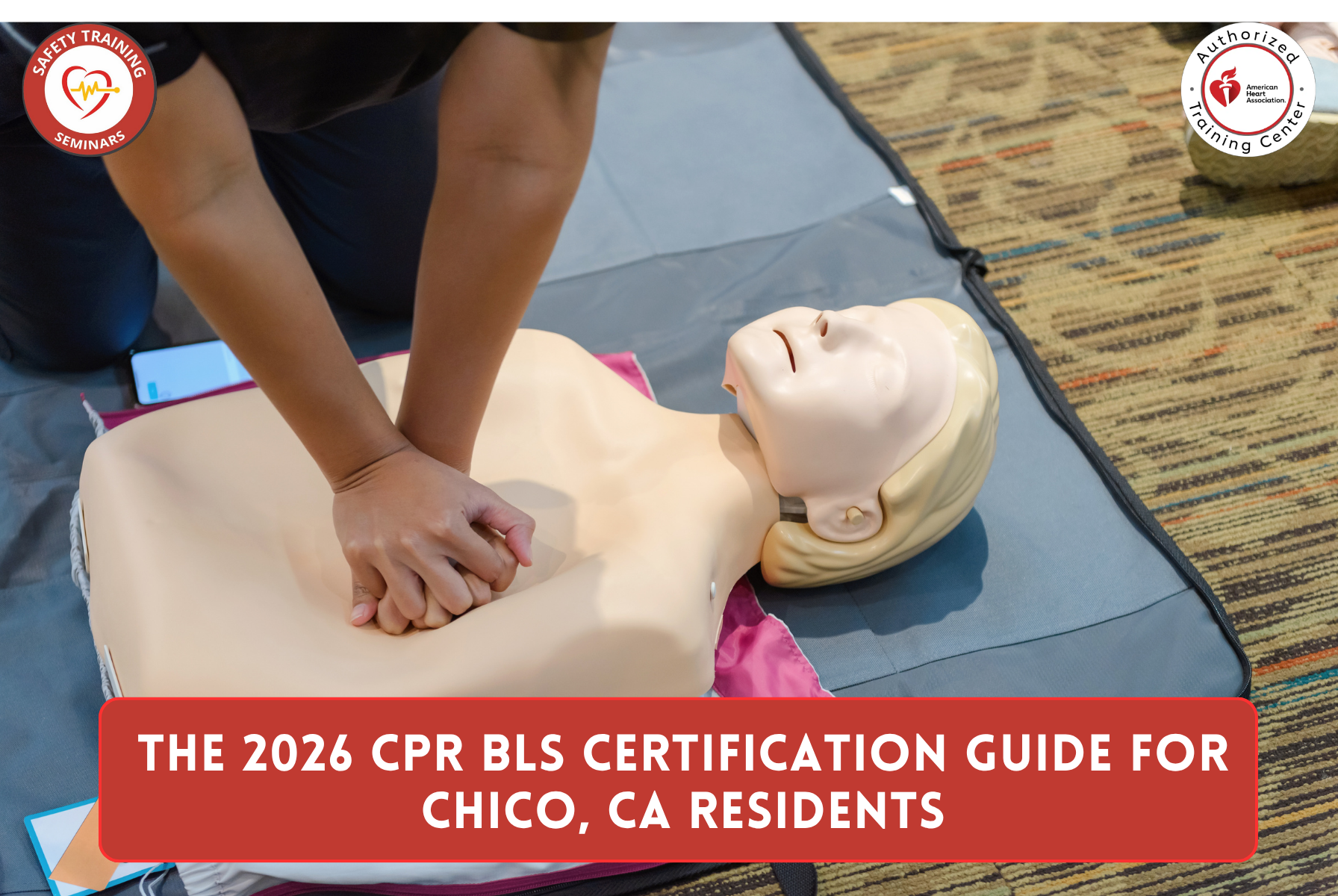
- A hands-on skills check, usually performed on a manikin with instructor observation
The hands-on portion is not optional filler. Chest compressions and airway management are physical skills, and most healthcare employers require proof that a student has actually demonstrated them under observation, not just passed a quiz.
How Often Do You Need to Renew?
Renewal timing is set by the certifying organization and the specific card format used, and it can vary between providers. Many students schedule a refresher course before their current card expires rather than waiting until it lapses, since some employers require active certification with no gap.
If you’re renewing rather than certifying for the first time, ask whether a renewal-specific class is available. These are often shorter, since they focus on skills review instead of teaching every concept from the beginning. Your employer or program coordinator can confirm exactly how frequently your specific role requires renewal.
Does an Online-Only Card Meet Your Requirement?
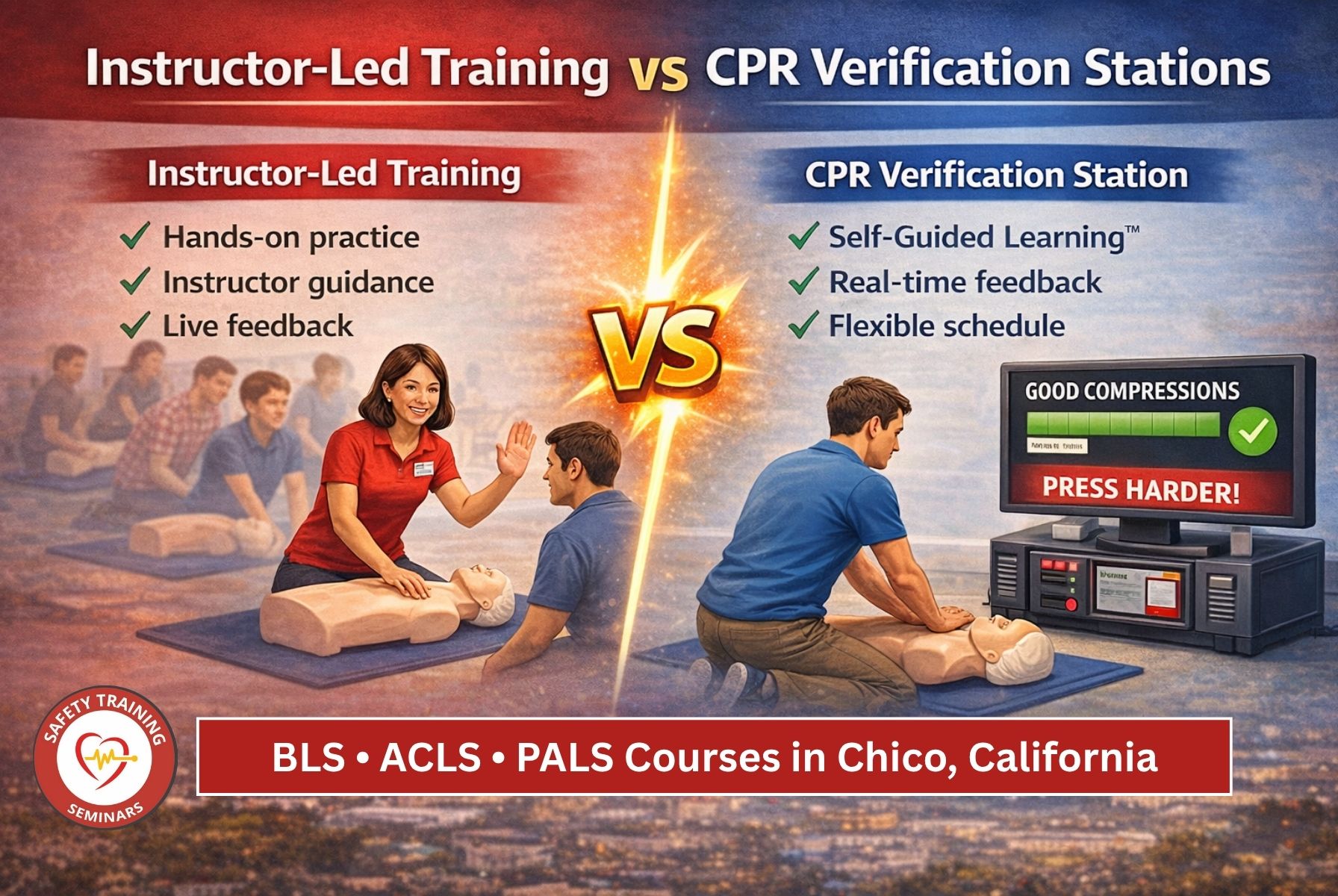
This question comes up constantly, and the honest answer is: it depends entirely on who’s requiring the certification. Many hospitals and clinical programs specifically require a blended format, meaning an online knowledge portion paired with an in-person skills evaluation, because compression technique and AED use can’t be accurately assessed through a webcam.
Before registering for any course, confirm directly with your employer, school, or licensing board whether they require in-person skills testing or accept a fully online certificate. It’s a five-minute question that can save you from repeating a course.
Choosing a BLS Provider in the Chico Area
With no shortage of certification options advertised online, a few questions help separate a solid choice from a shortcut:
- Does the course include real hands-on skills practice, not just a video and quiz?
- Is the certification card format one your employer or school has already confirmed they accept?
- Is there a physical training location, or is this purely a mail-order certificate?
- Will the provider answer specific questions about class structure before you register?
A provider that can answer these clearly, without vague marketing language, is generally a safer bet than one that can’t.
Training Options for Chico Residents
Safety Training Seminars operates a training center at 527 Flume Street, Suite 15, Chico, CA 95928, offering BLS, CPR, First Aid, ACLS, and PALS certification courses for healthcare workers, students, and community members throughout Butte County. Students commuting from Oroville or Paradise for clinical rotations at Chico-area hospitals often look for a class location that fits around shift schedules and coursework.
If you’re ready to compare course dates and formats, the BLS and CPR certification course page for Chico, CA lists current class information for the Flume Street location. Students traveling from further out can also review CPR and BLS class options for Oroville residents or BLS and First Aid training available near Gridley to see which location and schedule works best.
Preparing for Your First Class
A little preparation makes the class itself go more smoothly:
- Wear clothing you can kneel and move in during compression practice
- Bring a photo ID for check-in
- Complete any required pre-course online modules ahead of time
- Bring your current card if you’re renewing, so the instructor can confirm your certifying organization
Arriving early to handle paperwork also means the class can start on schedule for every student.
Frequently Asked Questions
Do I need BLS certification for a healthcare job in Chico, or is general CPR enough? It depends on the employer. Hospital-based and clinical roles typically require BLS specifically, while non-clinical workplace requirements often accept a general CPR and First Aid card. Check your offer letter or program handbook directly to confirm.
How long does a BLS class take for someone in Chico getting certified for the first time? Most first-time BLS courses are structured to be completed in a single session combining instruction with hands-on skills testing. Exact length depends on class format and provider, so confirm the schedule when you register.
Are BLS classes available for students commuting from Paradise or Biggs? Availability and scheduling vary by location and time of year. It’s worth checking current listings for the city closest to your commute before assuming a specific class date will be open.
What if I don’t pass the skills check during my BLS course? Instructors typically work with students to correct technique during the session itself, since the goal is accurate performance of the skill rather than simply passing a test. If you’re concerned about a specific step, ask your instructor for additional practice time.
Is BLS certification the same across every training provider in Chico? Core skills are consistent, but certifying organizations and card formats can differ. If your employer or school requires a specific certifying body, confirm that detail before enrolling anywhere.
Getting Certified in 2026
Heading into 2026, the most useful step for anyone new to BLS certification is confirming exactly what your employer, school, or licensing board requires before assuming a general CPR card will suffice. Once you know which certification applies to your situation, choosing a course with genuine hands-on practice will serve you better long-term than a shortcut online option.
Safety Training Seminars offers BLS, CPR, First Aid, ACLS, and PALS courses at its Chico training center, and reviewing the current course page for your city is a simple way to compare formats and confirm details before you register.